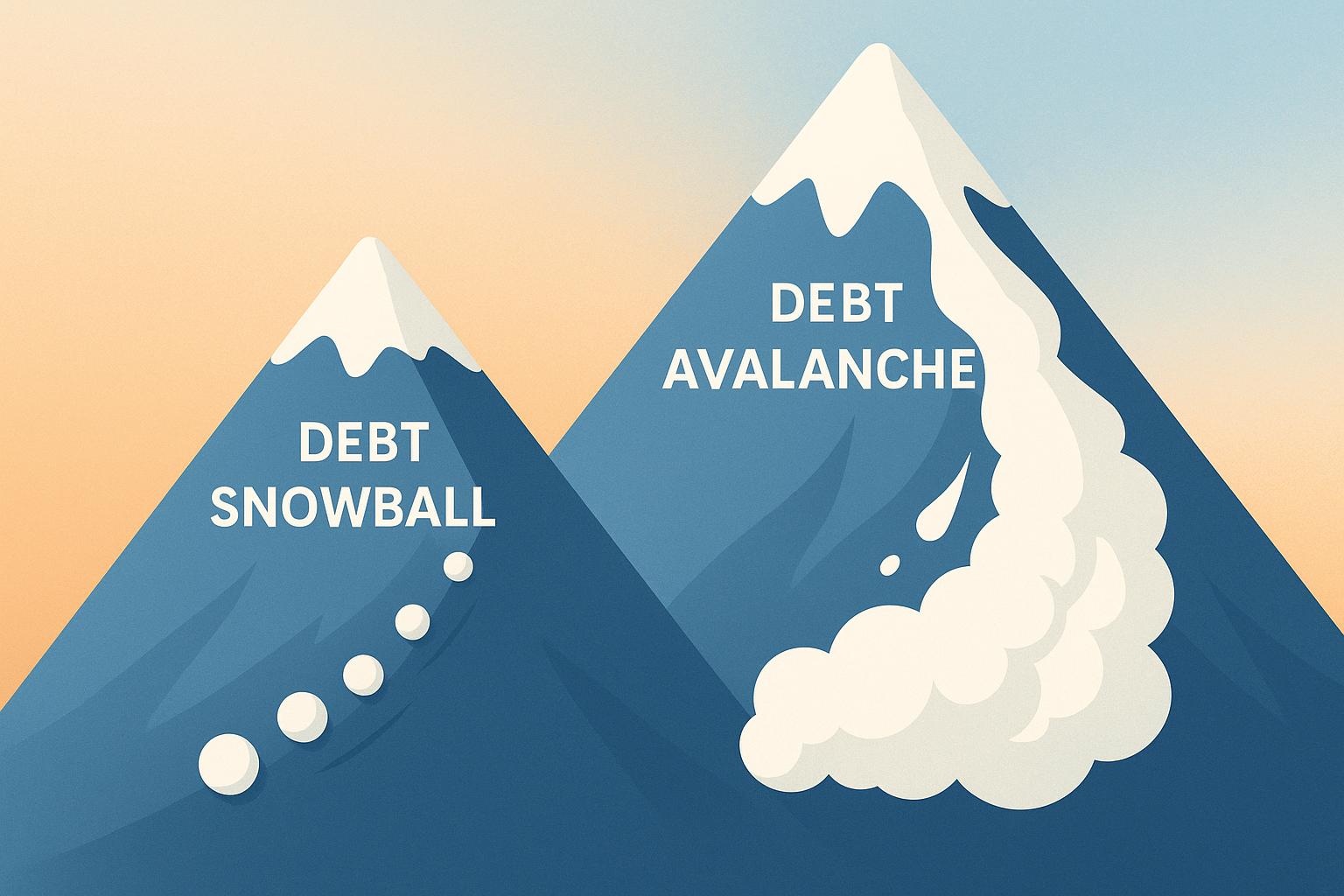
The Debt Snowball method prioritizes paying off your smallest debts first, giving you quick wins to stay motivated. The Debt Avalanche method focuses on paying off high-interest debts first, saving you the most money in the long run.
Which is better for you?
- Choose Debt Snowball if you need motivation through small victories.
- Choose Debt Avalanche if you want to save the most on interest and can stay disciplined.
Quick Comparison:
| Feature | Debt Snowball | Debt Avalanche |
|---|---|---|
| Focus | Smallest balance debts | Highest interest rate debts |
| Time to First Win | Faster | Slower |
| Interest Savings | Lower savings | Higher savings |
| Best For | Motivation seekers | Cost-conscious planners |
Both methods work, but your choice depends on your financial goals and mindset. Jump into the article for a deeper dive into each strategy.
Debt Avalanche vs. Debt Snowball: Which Is Better?
What is the Debt Snowball Method?
The Debt Snowball method focuses on paying off your smallest debts first, regardless of their interest rates. The idea is to build momentum with quick wins, keeping you motivated as you tackle larger debts.
How to Use the Debt Snowball Method
Here’s how it works:
- List all your debts in order, starting with the smallest balance.
- Pay the minimum amount on all your debts except the smallest one.
- Put any extra cash toward paying off the smallest debt.
- Once the smallest debt is paid off, redirect those payments to the next smallest debt.
This approach speeds up repayment by rolling freed-up payments into the next debt, creating a snowball effect that grows over time.
Why People Choose the Debt Snowball Method
The Debt Snowball method is popular because it delivers a sense of accomplishment early on. Research suggests this approach helps many people stay on track and eventually eliminate their debts. It’s especially helpful for:
- Those who need quick wins to stay motivated.
- People working toward financial goals like qualifying for a mortgage.
- Anyone who struggles to maintain focus during long repayment plans.
But, like any method, it’s not without its downsides.
Drawbacks of the Debt Snowball Method
While the Debt Snowball method is great for motivation, it can cost you more in the long run. Here’s why:
- You might pay more in interest compared to strategies focused on high-interest debts.
- It could take longer to become debt-free if high-interest debts are left for later.
- It’s less efficient mathematically, as it doesn’t prioritize minimizing total interest.
For example, if you add $100 extra each month to your smallest balance, you might still face interest costs of around $51,000 over 10 years. While this approach could save about $6,240 compared to minimum payments alone, it’s not the best choice for minimizing interest if you have significant high-interest debt.
What is the Debt Avalanche Method?
The Debt Avalanche method focuses on tackling high-interest debts first to reduce the total amount of interest paid. Unlike the Debt Snowball method, which emphasizes paying off smaller debts quickly for a sense of accomplishment, this method is all about saving money in the long run by targeting the most expensive debts.
How the Debt Avalanche Method Works
Here’s how to implement the Debt Avalanche method step by step:
- List your debts: Organize all your debts by interest rate, starting with the highest.
- Pay minimums on everything: Ensure you’re making at least the minimum payments on all debts.
- Focus extra funds on high-interest debt: Any additional money you can spare goes toward the debt with the highest interest rate.
- Repeat the process: Once you’ve cleared the highest-interest debt, move on to the next one, applying the same strategy.
This method prioritizes efficiency, aiming to reduce the total amount of interest you pay over time.
Why Choose the Debt Avalanche Method?
The main advantage of this approach is that it minimizes your total interest costs. For instance, financial data shows the Avalanche method could lead to paying $1,011.60 in interest versus $1,514.97 with the Snowball method.
Some key benefits include:
- Reduces the total amount of interest paid.
- Can shorten the overall time it takes to get out of debt.
- Best suited for situations where debts have significantly different interest rates.
However, while it’s cost-effective, this method does have its challenges.
Challenges of the Debt Avalanche Method
Though the Debt Avalanche method is often the most efficient, it’s not always the easiest to stick with. Here are some common hurdles:
- Slow progress feels discouraging: High-interest debts often have larger balances, so it can take a while to see results.
- Requires discipline: Staying motivated can be tough when visible progress is slow.
- Consistent income is necessary: This method assumes you have extra money to put toward your highest-interest debt regularly.
- Less impactful with similar interest rates: If your debts all have similar rates, the benefits of this method may not be as noticeable.
To succeed with the Debt Avalanche method, you’ll need to stay focused on the long-term goal of saving money, even if the progress feels slower at first.
sbb-itb-e671417
Snowball vs. Avalanche: Key Differences
The Debt Snowball method focuses on paying off the smallest balances first, while the Debt Avalanche method prioritizes debts with the highest interest rates. Here’s a breakdown of how they differ.
For instance, the Avalanche method can save you thousands of dollars in interest compared to the Snowball approach. However, the psychological experience varies: Snowball offers quick wins and a sense of progress early on, while Avalanche requires patience since larger, high-interest debts take longer to pay off.
Method Comparison Chart
| Feature | Debt Snowball | Debt Avalanche |
|---|---|---|
| Priority Focus | Smallest balance debts | Highest interest rate debts |
| Time to First Win | Faster | Slower |
| Interest Savings | Lower potential savings | Higher potential savings |
| Motivation Factor | Encourages progress through wins | Focused on financial efficiency |
| Best For | Those who need quick motivation | Self-disciplined individuals |
| Timeline | ~10 years to debt freedom | ~9 years to debt freedom |
| Interest Savings | ~$6,240 vs. minimum payments | ~$12,000 vs. minimum payments |
| Key Strength | Builds momentum quickly | Saves more money overall |
| Main Challenge | Costs more in interest | Requires patience and discipline |
Your choice between these methods depends on your financial goals and mindset. If your debts have widely varying interest rates, the Avalanche method could lead to significant savings. On the other hand, if the interest rates on your debts are similar, the quick motivational boosts of the Snowball method might be more beneficial.
These points can help you decide which approach aligns best with your financial and emotional needs. We’ll dive deeper into this in the next section.
How to Pick Your Method
Deciding between the Debt Snowball and Debt Avalanche methods depends on your financial situation and what keeps you motivated. Let’s break down the key factors to help you choose the right approach.
Key Decision Points
Your repayment strategy should align with both your financial details and your personal drive. Here’s what to consider:
Interest Rate Differences: If your debts have a big gap in interest rates, the Debt Avalanche method will save you more money in the long run.
Motivation Style: Think about what keeps you motivated. If consistent small wins help you stay on track, the Debt Snowball method is a great fit. If you’re more focused on saving as much money as possible, the Debt Avalanche method might work better for you.
Debt Setup:
- Debts with similar interest rates? Snowball may be better for staying motivated.
- A wide range of interest rates? Avalanche will save you more money.
- Lots of small debts? Snowball offers quick victories.
- A few large, high-interest debts? Avalanche maximizes savings.
Use tools like Fullness’s debt management platform to analyze your situation and choose the best method for your goals.
Debt Management Tools
Fullness offers tools to help you put these strategies into action:
| Feature | Supports Snowball | Supports Avalanche |
|---|---|---|
| Debt Prioritization | Ranks debts by balance | Ranks debts by interest rate |
| Progress Tracking | Visual progress bars | Interest savings calculator |
| Payment Planning | Minimum payment scheduler | Extra payment optimizer |
| Goal Setting | Celebrations for milestones | Tracks total interest saved |
These tools allow you to:
- Track your debt payoff progress in real time
- Calculate how much interest you’re saving
- Set up automatic payment reminders
- Adjust your strategy as your situation changes
- See your debt-free timeline come to life
Conclusion
The Debt Avalanche method can save you more money in the long run. For instance, one study showed savings of $45,340 in interest over 9 years compared to $51,000 with the Debt Snowball method. These numbers emphasize the importance of selecting the approach that fits your financial situation.
Experts agree that if your debt includes high-interest loans, the Avalanche method is often the better choice.
Here are some key considerations:
- Interest Rates: Avalanche is ideal when rates vary significantly, while Snowball works better if rates are similar.
- Motivation: If you need quick wins to stay motivated, go with Snowball. For bigger savings over time, stick with Avalanche.
- Your Situation: Think about the types of debt you have and how disciplined you can be with payments.
Tools like Fullness can simplify the process, offering features like debt prioritization, progress tracking, and payment planning. Start organizing your debts today and track your journey toward financial freedom.
FAQs
Which is better for me: the Debt Snowball or Debt Avalanche method if my interest rates are similar?
If your debts have similar interest rates, the Debt Snowball method can be a great choice because it helps you build momentum by paying off smaller balances first. This can provide a sense of accomplishment and keep you motivated.
On the other hand, the Debt Avalanche method focuses on paying off debts with the highest interest rates first, which usually saves more money over time. However, with similar interest rates, the financial difference between the two methods may be minimal, so it’s often a matter of personal preference and what keeps you motivated to stay on track.
Can I switch between the Debt Snowball and Debt Avalanche methods after starting one?
Yes, you can switch between the Debt Snowball and Debt Avalanche methods at any time if your priorities or financial situation change. Flexibility is key when managing debt, and it’s important to choose the approach that keeps you motivated and on track.
For example, you might start with the Debt Snowball method to build momentum by paying off smaller balances first. Later, you could transition to the Debt Avalanche method to focus on minimizing interest costs. The best strategy is the one that aligns with your goals and helps you stay consistent in paying down debt.
How can I stay motivated when using the Debt Avalanche method, especially since results may seem slow at first?
Staying motivated with the Debt Avalanche method can be challenging at the start because progress may feel slow. To keep yourself on track, focus on the bigger picture: this strategy saves you more money in the long run by minimizing interest payments. Remind yourself that every payment brings you closer to financial freedom.
You can also celebrate small milestones, such as reducing your overall debt balance or paying off a high-interest loan. Tracking your progress visually – like using a chart or app – can make your achievements more tangible. By staying consistent and focusing on your ultimate goal, you’ll find it easier to stay committed to the process.
Leave a Reply