An emergency fund is your safety net for unexpected expenses like medical bills, car repairs, or job loss. Start by saving $1,000 to handle minor emergencies. Then, aim for 3–6 months of essential expenses, depending on your job security, dependents, and cost of living.
Key Steps to Build Your Fund:
Automate Savings: Set up direct deposits to a high-yield savings account.
Use Extra Income: Save tax refunds, bonuses, or side gig earnings.
Track Progress: Use tools like Fullness to monitor and adjust your savings.
The Complete Guide to Emergency Funds (And Where to …
Setting Your Emergency Fund Target
Now that you’ve identified common emergencies, it’s time to turn those potential costs into a clear savings goal. Use the expense categories below to create a realistic target for your fund.
Basic Savings Guidelines
A good starting point is to save three to six months’ worth of essential expenses. Begin with a smaller milestone, like $1,000, to handle minor emergencies. Once that’s in place, aim to cover one month’s costs and continue building your fund over time.
Personal Factors to Consider
The size of your emergency fund should reflect your specific situation:
Job security: If you have a steady income, aim for 3–4 months of expenses. For variable or unpredictable income, plan for at least 6 months.
Dependents: Supporting others means you’ll need a larger buffer.
Cost of living: Living in an area with higher expenses will require a bigger fund.
Calculate Your Monthly Expenses
To figure out how much you need, start by listing your essential monthly expenses, such as:
Housing (rent or mortgage)
Utilities (electricity, water, gas)
Food and groceries
Transportation (fuel or public transit)
Insurance premiums
Minimum debt payments
Healthcare
Childcare
Phone and internet
Basic household maintenance
Add these up to find your total monthly expenses. Multiply that number by three to six to determine your savings target.
Building Your Emergency Fund
Here’s how you can consistently grow your emergency fund:
Set Up Automatic Savings
Automate your savings by scheduling direct deposits or recurring transfers that align with your paycheck schedule. Start small if needed, and gradually increase the amount as your budget allows.
Use Extra Income Wisely
Unexpected money – like tax refunds, bonuses, credit card rewards, or salary bumps – can be a great boost for your emergency fund. Instead of increasing your spending, channel those additional dollars directly into savings.
Save While Managing Debt
Focus on building a $1,000 cushion before prioritizing extra debt payments. If your income is unpredictable, consider pausing aggressive debt repayment until your savings are more secure. Once you’re in a better position, balance saving with paying off debt.
Afterward, choose a convenient, interest-earning account for your emergency fund to keep it accessible and growing.
sbb-itb-e671417
Best Places for Emergency Savings
Pick the Right Account
Place your emergency fund in an account that’s easy to access, like a high-yield savings or money market account. These options let you withdraw funds without penalties and provide quick access when needed. To avoid dipping into this money for everyday expenses, consider setting up a separate account specifically for emergencies.
Keep Emergency Funds Separate
Having a dedicated savings account for emergencies helps you avoid accidental spending. This separation ensures your safety net remains intact for unexpected situations.
Use tools like Fullness to organize your finances. It can help you categorize spending, set savings goals, schedule reminders, and track your fund’s growth with clear visuals. Once your fund is in place, you’ll have an easier time replenishing it after use and adjusting your goals as needed.
Managing Your Emergency Fund
Once you’ve picked the right account, keeping your emergency fund in good shape comes down to three simple steps:
Replace Used Funds
If you dip into your fund, make it a priority to refill it as soon as possible. Here are a few ways to do that:
Set up automatic transfers from your checking account to your emergency fund.
Cut back on non-essential spending to free up extra cash.
Sell items you no longer need or take on a side gig.
Direct bonuses, tax refunds, or other unexpected income straight into your savings.
"Start someplace with whatever amount of money you can. Because no matter what, whatever you can is better than nothing."
Once your fund is back to its full amount, review it regularly to ensure it still meets your needs.
Update Your Savings Goal
Life changes – marriage, having kids, buying a home, or switching jobs – can impact your finances. Re-evaluate your savings target annually or after major milestones to make sure it aligns with your current expenses.
Track Your Progress
Stay on top of your fund by using tools like Fullness’s tracker. It helps you monitor your progress, sends balance alerts, and lets you tweak transfers when needed. Keeping an accurate view of your fund makes it easier to spot gaps and stay motivated.
"Start someplace with whatever amount of money you can. Because no matter what, whatever you can is better than nothing."
Next Steps
You’ve set your goal, picked an account, and created a plan – now it’s time to take action. Start by aiming to save an initial $1,000 as soon as possible.
Open a high-yield savings account: This keeps your funds separate and easy to access.
Automate your savings: Use Fullness to schedule contributions and turn on the round-up feature. This tool saves spare change from your purchases – like rounding up a $3.50 coffee to $4.00 and saving the extra $0.50.
Save unexpected income: Direct tax refunds, bonuses, and rewards straight into your savings.
Track your progress in Fullness and adjust your contributions as needed. Think of your emergency fund as a regular monthly expense, just like rent or utilities. Start building your financial cushion today.
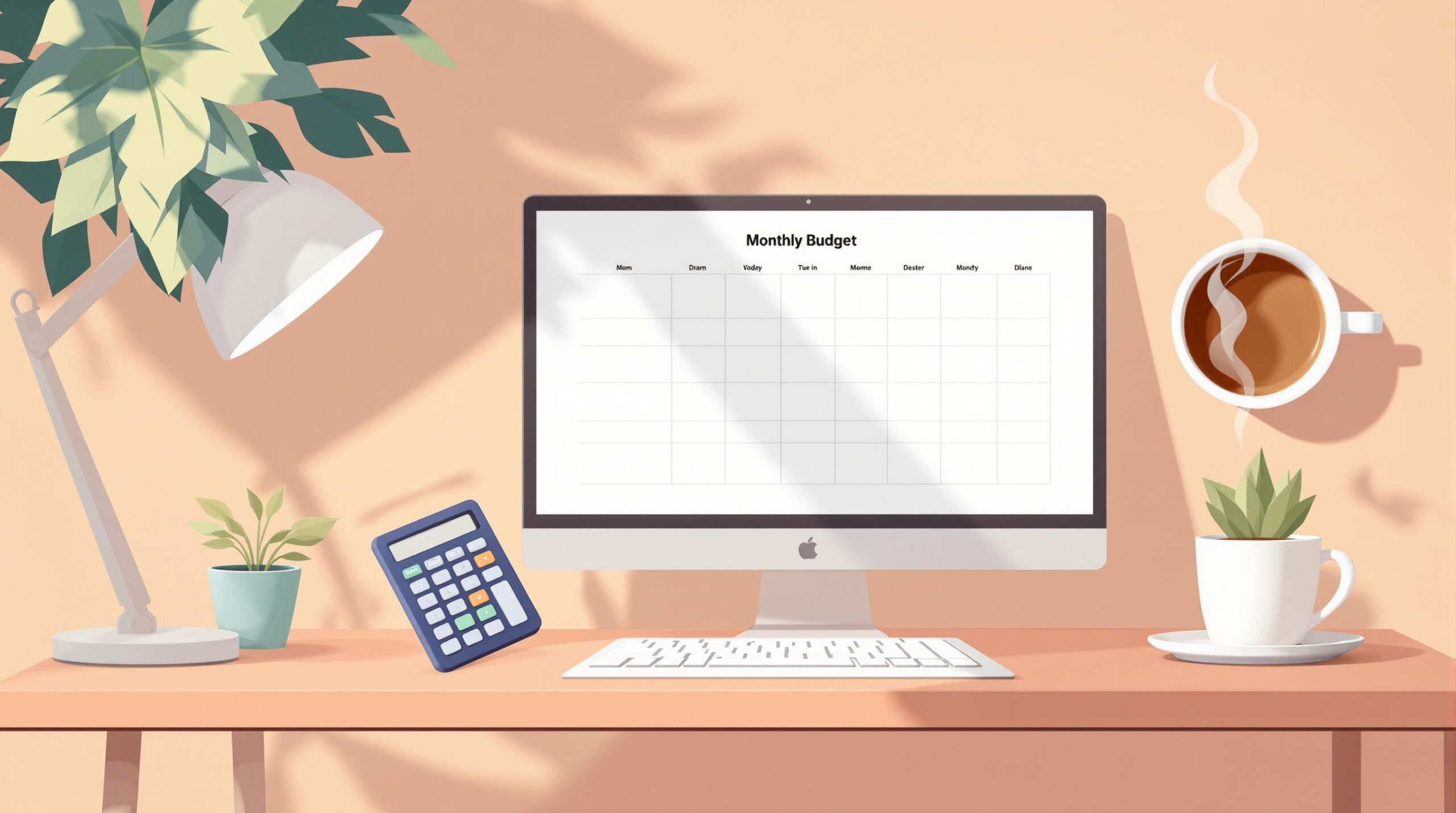
Creating your first monthly budget doesn’t have to be complicated. Follow these 7 simple steps to take control of your finances, track your spending, and work toward your financial goals:
Calculate Your Income: Know your total take-home pay after taxes and deductions. For variable income, budget using your lowest monthly earnings.
List Your Expenses: Separate fixed costs (e.g., rent, loans) from variable costs (e.g., groceries, entertainment). Don’t forget yearly expenses like insurance or holiday gifts.
Group Expenses: Use the 50/30/20 rule – 50% for needs, 30% for wants, and 20% for savings or debt repayment.
Set Goals: Define short-term (e.g., emergency fund), mid-term (e.g., home down payment), and long-term goals (e.g., retirement).
Choose a Budgeting Method: Options include the 50/30/20 rule, zero-based budgeting, or “pay yourself first.”
Track Spending: Monitor weekly by recording all transactions and categorizing them. Adjust for overspending or income changes.
Review Monthly: Compare your actual spending to your budget, reallocate funds, and refine goals as needed.
Quick Overview:
Step
Key Action
Income
Calculate take-home pay; use lowest income for variable earnings.
Expenses
Track fixed and variable costs; plan for yearly expenses.
Grouping
Apply 50/30/20 rule to allocate funds.
Goals
Set short, mid, and long-term financial targets.
Method
Pick a budgeting approach that fits your lifestyle.
Tracking
Review weekly and categorize expenses.
Reviewing
Adjust budget monthly to stay aligned with goals.
Start small, stay consistent, and use tools like automated expense trackers to simplify the process. A budget is your roadmap to financial independence.
How To Create A Monthly Budget for Beginners | Step by Step …
Step 1: Calculate Your Monthly Income
Building a budget starts with knowing how much money you have coming in each month. This means figuring out your total take-home pay after taxes and deductions.
Identify Your Main Income Sources
Start by listing your regular income, typically your post-tax salary or wages. For instance, if you earn $60,000 annually, your gross monthly income is about $5,000. After taxes and deductions, this might drop to around $3,800. Common deductions include:
Federal income tax
State and local taxes
Social Security (6.2% up to $168,600)
Medicare (1.45% of your total salary)
Pre-tax deductions, like retirement contributions or health insurance
If your income isn’t consistent, make adjustments to reflect that.
Handling Variable Income
"When you have an inconsistent income, you should generally budget for the worst. Ideally, you always want to avoid spending more than you make in a given month, and budgeting for your worst-case scenario prevents that."
For irregular income, follow these steps:
Track your earnings over the past 3–6 months.
Determine your lowest monthly income during that period.
Use that figure as your baseline for budgeting.
For example, if your income fluctuates between $3,000 and $7,000 monthly, budget based on $3,000. This ensures you can cover essential expenses during slow months while saving the extra during high-earning months.
Income Type
How to Calculate
Fixed Salary
Monthly gross income minus (taxes + deductions)
Hourly Wage
(Hourly rate × hours worked) minus deductions
Variable Income
Use the lowest monthly income as your baseline
Multiple Sources
Add up net income from all sources after taxes
Step 2: List Monthly Expenses
Track your spending to build a budget that fits your lifestyle.
Fixed vs. Variable Costs
Fixed costs are predictable and stay the same each month. Common examples include:
Variable costs, on the other hand, change monthly depending on your usage and decisions. These might include:
Utilities (electricity, water, gas)
Groceries
Transportation (gas, rideshare services)
Entertainment
Dining out
Shopping
Healthcare expenses
"Fixed expenses are the easiest to budget for since you know what to expect, and may get some advance notice if they rise or fall." – Emily Starbuck Gerson
To get an accurate picture, review the last three months of your spending. For variable costs, calculate the average to set reasonable budget goals.
Expense Type
Characteristics
Examples
Budgeting Approach
Fixed
Consistent each month
Rent: $1,500
Plan exact amount
Variable
Changes monthly
Utilities: $80–$150
Use 3-month average
Once you’ve organized your monthly costs, you can prepare for less frequent expenses.
Include Yearly Expenses
Some expenses don’t occur every month but still need planning. Here’s how to manage them:
List all non-monthly costs and divide each by 12, so you can save a little each month:
Annual insurance premiums
Property taxes
Car maintenance
Holiday gifts
Subscription renewals
Professional dues
Use a 12-month savings chart to track when these expenses are due.
Expense Type
Annual Cost
Monthly Savings
Car Insurance
$1,200
$100
Property Tax
$3,600
$300
Holiday Fund
$1,200
$100
Car Maintenance
$600
$50
Set aside these monthly savings to cover costs when they arise. Regularly check your yearly expenses to adjust for any changes.
Step 3: Group Your Expenses
Organize your expenses to better balance spending and saving.
Use the 50/30/20 Rule
The 50/30/20 rule is a simple way to divide your after-tax income. Here’s how it looks for a monthly income of $5,000:
Category
Percentage
Purpose
Monthly Example
Needs
50%
Essential expenses
$2,500
Wants
30%
Lifestyle choices
$1,500
Savings
20%
Future security
$1,000
These percentages aren’t set in stone – they’re meant to guide you. Once you have this framework, the next step is to separate your essential needs from discretionary wants.
Distinguish Needs from Wants
Now, refine your budget by separating what’s necessary from what’s optional:
Needs (50% of income):
Rent or mortgage
Basic utilities
Groceries
Health care
Essential transportation
Insurance premiums
Minimum debt payments
Wants (30% of income):
Dining out
Streaming services
Shopping for non-essentials
Gym memberships
Travel
Hobbies
Savings/Debt (20% of income):
Emergency fund contributions
Retirement accounts
Extra debt payments
Investments
A quick way to decide if something is a "need" is to ask: Would I cover this with my emergency fund if I lost my income?
For example, housing often represents a large portion of the needs category. In Q4 2022, Moody’s Analytics reported that U.S. renters spent an average of 30% of their income on housing alone. This highlights how one essential expense can take up a big share of your budget.
If your spending doesn’t match these percentages yet, don’t stress. Start tracking your expenses in these categories and work on making gradual adjustments. The goal is steady improvement, not perfection.
Step 4: Set Money Goals
Now that you’ve sorted out your expenses, it’s time to define clear financial goals. These goals will guide your saving efforts as you fine-tune your budget.
Define Short, Mid, and Long-Term Goals
Break your goals into three time frames:
Time Frame
Target Timeline
Example Goals
Short-term
Within 1 year
Build an emergency fund, pay off debt
Mid-term
3–5 years
Save for a home down payment or a car
Long-term
5+ years
Plan for retirement, set up an estate plan
If you don’t have an emergency fund, make it your top priority. Experts suggest saving enough to cover 3–9 months of living expenses. With the median U.S. rent at $2,016 in 2024, your emergency fund should ideally range from $6,048 to $18,144, depending on your monthly costs.
"Time is your biggest advantage when it comes to long-term financial planning. The earlier you start saving for retirement, the less financial stress you’ll face later."
– Noah Damsky, founder of Marina Wealth Advisors
Once your goals are clear, turn them into consistent savings habits.
Build a Savings Routine
Here’s how to make saving a regular part of your financial plan:
Set up automatic transfers: Automate transfers to your savings account on payday so saving becomes effortless.
Follow the 20% rule: Aim to save at least 20% of your income, based on the 50/30/20 budgeting guideline.
Start small if necessary: If 20% feels overwhelming, begin with a smaller percentage and increase it over time.
"Your financial goals aren’t set in stone. Life changes – like marriage, having children, or switching careers – can impact your financial priorities."
– Daniel Milks, founder of Woodmark Wealth Management
Make sure your goals are SMART: Specific, Measurable, Achievable, Relevant, and Time-bound. For example, instead of saying, "save more money", aim for something like, "save $6,000 for an emergency fund by December 2025 by putting aside $500 each month." This approach ties directly to your earlier budgeting steps.
Review your goals monthly and adjust as needed to account for life’s changes.
sbb-itb-e671417
Step 5: Pick Your Budget Method
Choose a budgeting method that aligns with your financial goals and lifestyle.
Compare Budget Systems
Here’s a look at some popular budgeting methods to help you decide which one works best for your income and spending habits:
Method
Best For
How It Works
50/30/20 Rule
Stable income earners
Allocate 50% to needs, 30% to wants, and 20% to savings or debt repayment.
Zero-Based
Detail-oriented planners
Assign every dollar a purpose, ensuring no money is unaccounted for.
Pay Yourself First
Savings-first individuals
Prioritize saving by setting aside funds before covering expenses.
Calendar Budget
Visual learners
Organize and track expenses based on specific dates.
For a clear example, revisit the 50/30/20 breakdown in Step 3. If you’re in a tight financial spot or focusing on paying off debt, a bare-bones or zero-based budget might be more effective. These approaches help you account for every dollar and prioritize debt reduction.
Once you’ve chosen a method, the next step is to use tools that make sticking to your budget easier.
Set Up Budget Tools
Fullness provides features designed to simplify the budgeting process:
Track Daily Expenses
Fullness’s expense tracking tool categorizes your spending automatically, helping you spot patterns as they happen.
Set Up Automated Alerts
Enable reminders for upcoming bills and notifications for spending activity to stay on top of your finances.
Monitor Progress
Use Fullness’s financial snapshots to:
Analyze spending habits
Track your savings growth
Adjust budget categories as needed
Identify areas for improvement
With the right tools and a budget method that suits your needs, you’ll be better equipped to manage your money effectively.
Step 6: Track Your Spending
Once you’ve chosen your budgeting method, the next step is to consistently track every expense. This is essential for keeping your budget on track.
Check Expenses Weekly
After setting up your budget in Step 5, it’s time to monitor your spending. Set aside time each week – Sunday evenings work well for many – to review your expenses and detect any overspending early.
Record Every Transaction
Keep track of all your spending, including:
Categorize Your Spending
Assign each expense to the correct budget category as soon as possible. Tools like Fullness can simplify this by automatically sorting your transactions.
Review Account Statements
Go through your account statements weekly to spot unexpected charges, renewals, fees, or pending transactions.
Update When Needed
Budgets aren’t static – they should evolve with your financial situation. Regular tracking helps you know when it’s time to make changes. Here’s a quick guide:
Reason for Update
Trigger
What to Adjust
Overspending
When a category exceeds its limit
Move funds from another category or cut back
Income Changes
When your income increases or decreases
Reallocate your budget accordingly
New Expenses
Before they impact your budget
Add a new category or adjust an existing one
Seasonal Changes
Monthly or quarterly
Account for seasonal costs like heating or cooling
"To get the most out of budgeting, track your expenses and income consistently and completely." – Fidelity
Tips for Better Tracking
Use Fullness’s financial tools to identify spending trends.
Set up alerts to notify you of unexpected expenses.
Stick to a weekly review schedule to stay on top of your budget.
Shift funds between categories if you consistently overspend in one while underusing another.
Save digital copies of important receipts for taxes or warranties.
Step 7: Check Monthly Progress
After tracking your spending weekly, take a moment each month to assess your overall progress. Monthly reviews are a key part of staying on top of your finances and ensuring your spending matches your goals. These check-ins help you fine-tune your budget and spot areas that need adjustments.
Set a Monthly Review Routine
Pick a consistent day, like the first or last day of the month, to review your budget. During these reviews:
Compare Actual Spending to Your Plan
Check if you stayed within your budget for each category. Take note of any areas where you consistently overspend or underspend.
Review Focus
What to Check
Action Needed
Overspending
Categories over budget
Cut back spending or adjust limits
Underspending
Extra funds in categories
Reallocate to savings or priorities
Irregular Expenses
Unexpected costs
Add new categories or adjust budget
Income Changes
Fluctuations in earnings
Update allocations to reflect changes
These reviews, combined with detailed budget reports, will give you a clearer picture of where your money is going and where you can make improvements.
Leverage Budget Reports
Use tools like Fullness’s financial reports to dig deeper during your monthly reviews:
Analyze Spending Reports
Look closely at where your money is going. Identify any unnecessary expenses and think about how you can redirect those funds to better support your financial goals.
Adjust Based on Trends
If your spending habits have shifted, update your budget to reflect those changes. This ensures your plan stays realistic and effective.
Track Goal Progress
Use Fullness’s tracking features to see how close you are to reaching your financial goals. Regular reviews help you stay on track and make adjustments if needed.
Tips for Better Budget Reviews
Update debt balances monthly or quarterly to stay informed.
Review recurring expenses annually to identify subscriptions or services you no longer need.
Double-check credit card payments to ensure they’re categorized correctly.
Reconcile your accounts regularly to catch any errors or discrepancies.
Adjust your budget whenever major life changes occur, like a new job or unexpected expenses.
These monthly check-ins are crucial for keeping your budget on track and preparing you for the next steps in managing your finances effectively.
Keys to Budget Success
Once your budget is set and your spending is tracked, these steps can help you stay on course for the long haul.
Make Budgeting a Routine
Dedicate time each week to review your spending and update your records in Fullness. Regular check-ins make it easier to stay in control of your finances.
Tools That Simplify Budgeting
Fullness offers features like automated transaction imports, expense categorization, bill reminders, and goal tracking to streamline your budgeting process.
Small Steps, Big Results
Focus on gradual adjustments to build lasting habits. Here’s a simple plan:
Timeframe
Task
Result
Weekly
Track all expenses
Identify spending trends
Monthly
Adjust 1–2 categories
Boost savings
Quarterly
Review and refine goals
Maintain steady progress
Stay Inspired with Goal Tracking
Fullness’s goal-tracking tools can help you:
Keep an eye on your progress
Celebrate small wins along the way
Adjust your goals as needed
Visualize your financial journey
These visual tools make it easier to stick to your weekly and monthly routines.
Prepare for the Unexpected
When surprise expenses pop up, tap into your emergency fund first and make temporary adjustments to flexible spending categories.
Maximize Technology
Keep using Fullness to maintain your budgeting efforts with features like:
Financial Snapshots: Quick insights into your spending habits
Secure Data: Protection for your financial information
Debt Management: Tools to track and plan payments
Savings Goals: Stay focused on your targets
Conclusion
Setting up your first monthly budget is straightforward: follow these seven steps and use Fullness’s tools to create a strong financial plan.
The key is consistency. By tracking regularly and making small adjustments, you can save more and spend wisely.
Here’s a quick breakdown of how Fullness supports your budgeting journey:
Budget Step
How Fullness Helps
Impact on Your Finances
Income Tracking
Automated imports
Clear view of monthly cash flow
Expense Management
Smart categorization
Better spending awareness
Goal Setting
Visual progress tracking
Boosted motivation
Budget Reviews
Weekly/monthly reports
Smarter financial decisions
Check in on your finances every week and let Fullness’s tools guide you toward better habits. By sticking to these steps and using Fullness, you’ll stay in control of your money. With consistent monitoring and smart tweaks, you can build a budget that works for your lifestyle and brings you closer to financial independence. Small, steady efforts can lead to big changes.